Bathgate claims the world’s oldest known reptile fossil, which is the kind of fact a county town keeps in its back pocket for visitors. It is also typical of West Lothian, a place whose surprises sit just under the surface. The county is small, it is crossed every day by thousands of people on the M8 who never leave the motorway, and it repays anyone who does.
Livingston is at the centre of it, both geographically and in numbers. Around it lies a ring of older towns and villages, each with a character that owes nothing to the new town at all.
Linlithgow: the royal burgh
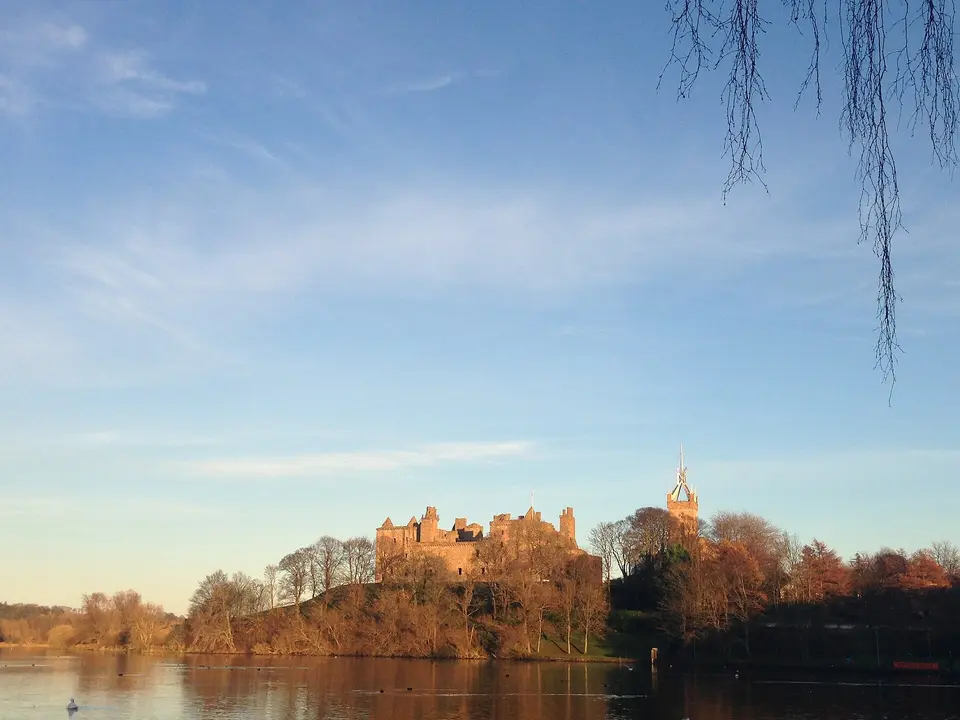
Linlithgow is the county’s showpiece. Its palace, now a roofless ruin in the care of Historic Environment Scotland, was one of the principal residences of the Scottish monarchs in the fifteenth and sixteenth centuries, and it overlooks a loch with a footpath all the way round. St Michael’s Parish Church stands next to the palace, its tower capped by a modern crown that people either love or have strong words about.
The high street below is a long, narrow burgh street with the County Buildings, old wells and a good number of small shops and cafés. Linlithgow also sits on the Union Canal, with a canal centre and boats in season. Half a day is enough to see the essentials; a full day lets you walk the loch and the towpath as well.
Bathgate: industry and invention
A few miles west of Livingston, Bathgate is the county’s second town, and the one with the deepest industrial roots. People have lived around here since about 3500 BC, and the Neolithic site at Cairnpapple Hill stands two miles to the north. By the twelfth century there was a church at Kirkton and a castle nearby. Coal and shale made the town grow in the Victorian era; later came vehicle manufacturing and electronics, before the big factories closed in the late twentieth century.
Bathgate’s most famous son is James Young Simpson, the pioneer of chloroform anaesthesia, and a primary school on the site of the old British Leyland factory now carries his name. Bathgate Academy, founded in 1833 with money from the estate of a local man who had made his fortune as a plantation owner, is a reminder of a more uncomfortable kind of history.
Broxburn and Uphall: shale country
North-east of Livingston, Broxburn and Uphall run into each other along the A899. Both grew with the shale oil industry, and the Greendykes bing near Broxburn is one of two scheduled shale monuments in the county. The other is the Five Sisters. Uphall station, on the Bathgate line, now serves the eastern edge of Livingston as well as the village.
These are working towns rather than sights, but they explain a great deal about the landscape. The bings, the old miners’ rows and the industrial estates all belong to the same story of oil from rock, which ran from the 1850s until 1962. The chemist James Young, who patented a method of distilling oil from shale, built the industry’s first works in the area, and his nickname of Paraffin Young says the rest. Most of what he started has gone, but the street names and the bings remain.
The Calders: Mid, East and West
South and east of Livingston lie the three Calders. Mid Calder stands on a steep hill above the River Almond and Calder Wood, on a crossroads used since the eleventh century. The Sandilands family, later the Lords Torphichen, have held Calder House in the village since 1348, and drovers once brought Highland cattle through on their way south. East Calder is larger and newer, and Almondell and Calderwood Country Park lies between the two.
West Calder, further south-west, sits beneath the Five Sisters bing and was built by shale. Its main street is a classic mining town street, and the bing path gives one of the best views over the county.
The other Livingstons
A word about names, since visitors occasionally arrive confused. The Scottish town takes its name from a twelfth-century settlement, Villa Levingi, the town of a man called Leving. Plenty of places around the world share the name for different reasons, most of them honouring people called Livingston or Livingstone. Livingston Parish in Louisiana, for instance, is named after the American jurist Edward Livingston and sits in the Baton Rouge area; anyone planning a trip there should read up on things to do in Livingston on the Louisiana side rather than in West Lothian. The two have about as much in common as a bayou and the River Almond.
How to see the county from Livingston
Without a car, Linlithgow and Bathgate are the easiest targets, with buses from the town centre terminal and trains nearby. With a car, a loop through Linlithgow, Blackness, Broxburn and the Calders takes a day and shows most of the county’s range, from royal palace to shale bing. The West Lothian attractions page has more on the individual sights, and the day trips page looks further afield.
The county does not try very hard to attract visitors, which is part of its charm. Linlithgow on a quiet weekday morning, with the palace reflected in the loch and almost nobody about, is one of the best-kept secrets of central Scotland, and well worth an early start.