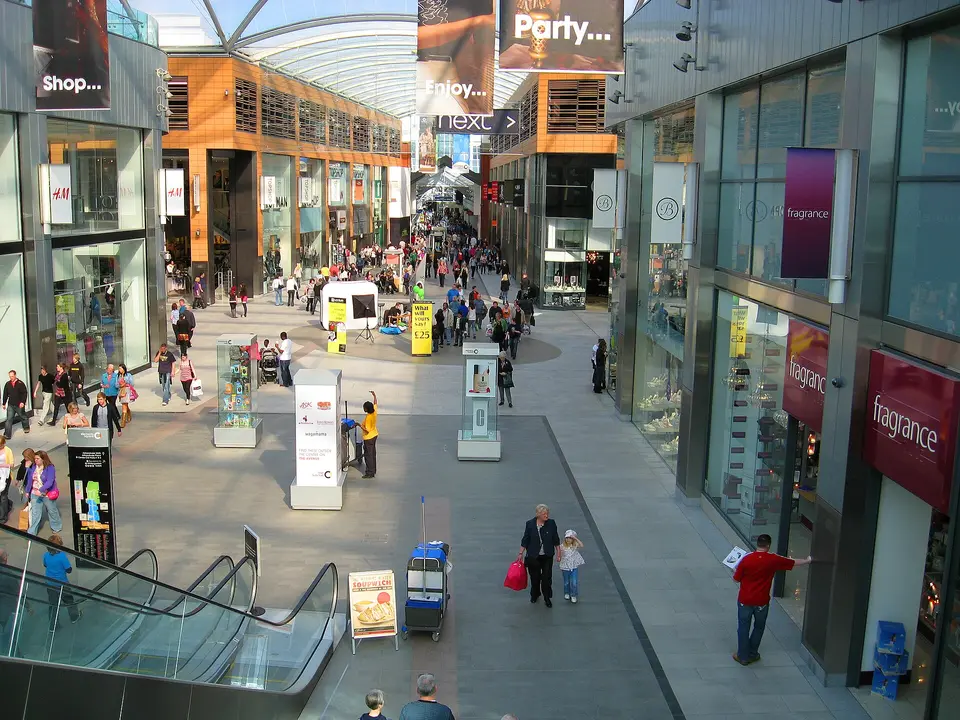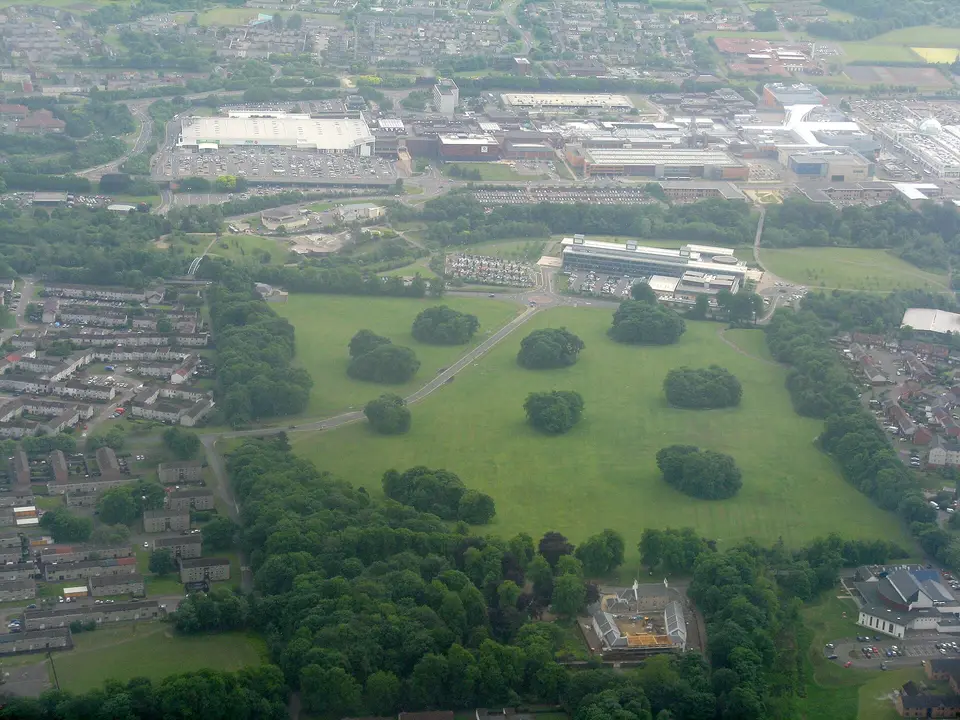
The Civic Centre was opened by Alex Salmond on 25 November 2009, and it is a good place to read the town centre from. Stand at its front and you have the River Almond behind you, The Centre and the outlet ahead, the stadium and the college off to the north-west and the trees of Howden Park across the water. Almost everything a resident might need to visit in a year is in that view, from the sheriff court to a pair of trainers.
That was the intention, though it took forty years to complete. When Livingston was designated a new town on 16 April 1962, the plan placed its commercial and civic heart in Almondvale, the low ground where the river bends through the middle of the town. Houses came first, in Craigshill and Howden; the centre followed in stages from the late 1970s onwards.
Almondvale, the commercial core
The name comes from the river, and the district is mostly commercial. The Centre opened its first phase in 1977, was extended in the 1990s and again in 2008, and the Livingston Designer Outlet joined it across Almondvale Avenue in 2000. Between them they make central Livingston the biggest indoor shopping location in Scotland, which brings visitors from Edinburgh and Glasgow as well as from the West Lothian towns.
The shopping guide covers the malls themselves. What matters for a visitor is the layout. Almondvale Avenue and Almondvale Boulevard carry the traffic; the bus terminal with its seven stances sits between the malls; car parks ring the whole site. Hotels, restaurants and pubs line the boulevard, which is the closest thing the town has to a main street.
A short history of the centre
The plan of the 1960s was ambitious. Livingston was the fourth of Scotland’s five post-war new towns, after East Kilbride, Glenrothes and Cumbernauld, and it was meant to take overspill population from Glasgow while drawing new industry to West Lothian. Its designers learned from the others. Cumbernauld had put everything into a single megastructure; Livingston kept the centre lower and more spread out, with the river and the parks between the buildings.
The first shops opened in 1977 and served a town that was still under construction. Through the 1980s the electronics factories of Silicon Glen, in Houston Industrial Estate and Kirkton Campus, brought workers and money. The 1990s added the supermarket extension and the stadium, the 2000s the outlet and the Civic Centre. The Livingston Development Corporation, which had built and run all of this, was wound up in 1997, and responsibility passed to West Lothian Council.
If you want the longer story, the history page follows the town from its medieval village to the present, and the architecture page looks at the buildings themselves.
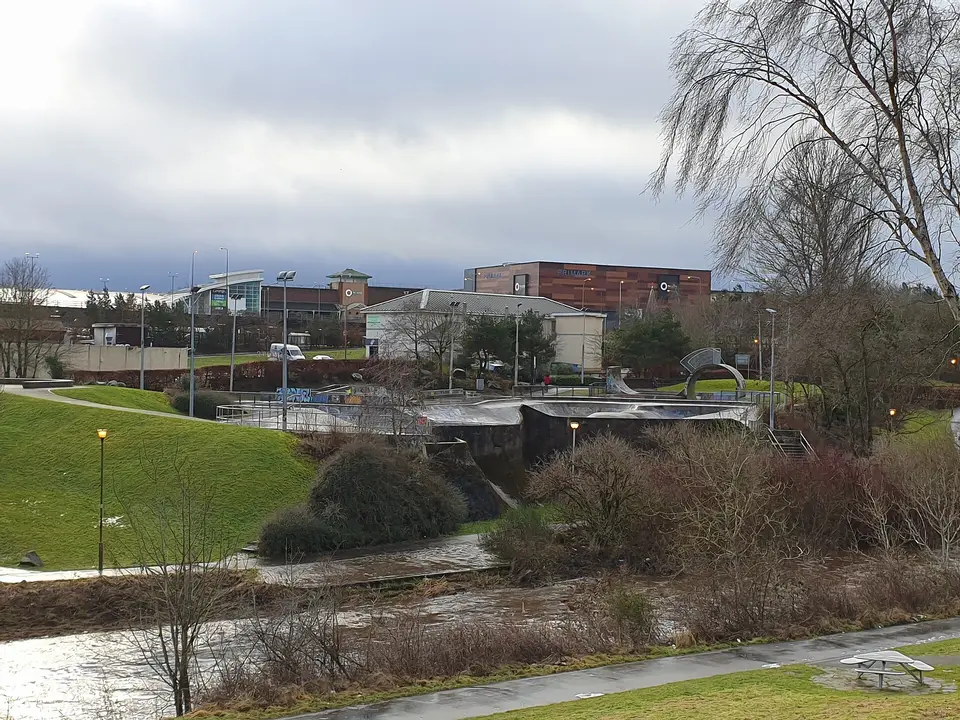
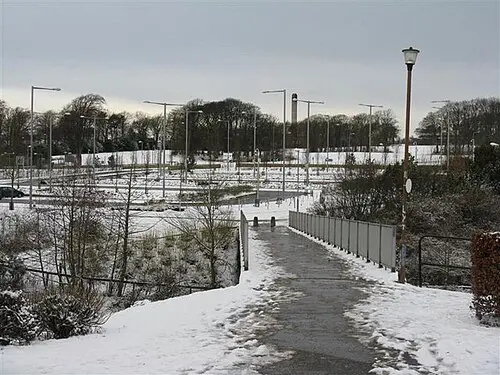
Almondvale, the commercial core of the town centre. · One of the footbridges that link the centre with Howden across the Almond.Photo: LordHarris, CC BY-SA 4.0Photo: M J Richardson, CC BY-SA 2.0
The Civic Centre on the Almond
Before 2009 the council, the police and the courts were spread across the town. The Civic Centre brought them together just north of The Centre on the riverbank: West Lothian Council, the sheriff and justice of the peace courts, the Procurator Fiscal, the Children’s Reporter and the health and care partnership. Until 2013 it also held the divisional headquarters of Lothian and Borders Police, before the creation of Police Scotland.
The building is not a tourist sight, but it is worth understanding. It anchors the north side of the centre and makes the walk between the malls and Howden Park feel like part of town rather than a car park edge.
The river and the parks
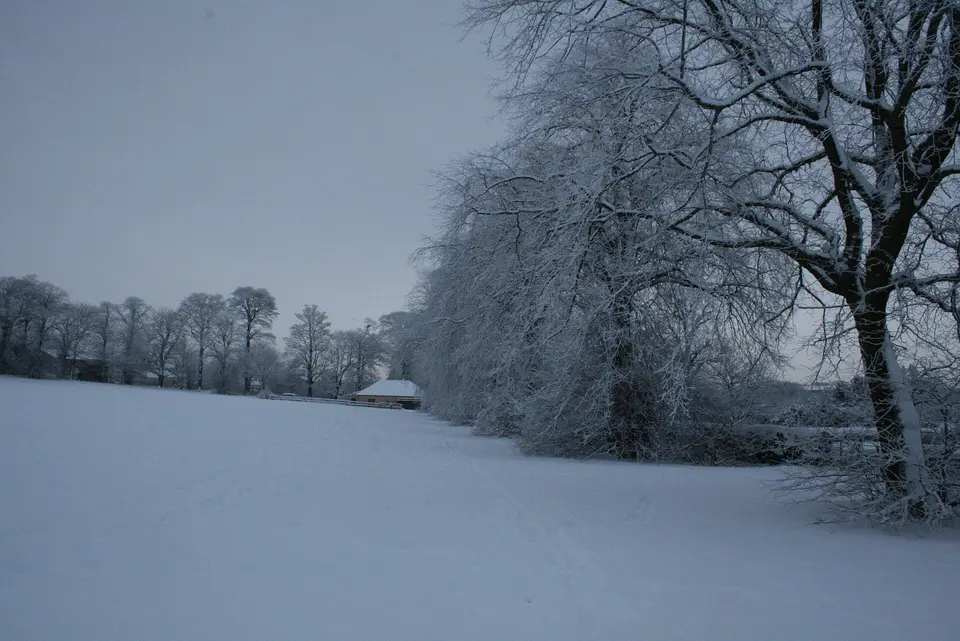
The River Almond is the reason the centre is where it is, and it is also its best feature. Almondvale Park, in the middle of town, has an adventure playpark, a measured route for walking or running and wildflower meadows. North of the river, Howden Park runs up to Howden House, built in the late eighteenth century and now home to the Howden Park Centre, the town’s arts centre with a 300-seat theatre.
Footbridges cross the Almond at several points. On a dry day the loop from the malls across to Howden Park, past the Civic Centre and back is the pleasantest short walk in central Livingston. You will share it with dog walkers, runners and office workers eating lunch on the benches.
The college, the stadium and the sports facilities
At the north-western edge of the centre stand West Lothian College and Almondvale Stadium. The college’s central campus is here, with a library, sports facilities and a training restaurant that won Scottish Restaurant of the Year in 2015 and 2017. The stadium has been home to Livingston FC since it opened in November 1995, after the relocation of Meadowbank Thistle from Edinburgh.
One loss is still felt. The town centre swimming pool and gym, opened in 1994 and known to everyone as Bubbles, closed permanently in August 2023 as part of cost cuts by West Lothian Leisure. For a town of this size the absence of a public pool is a sore point in local conversation, and it comes up in almost every discussion of the centre.
Getting into the centre
Most people arrive by car or bus. The town is bounded by the M8 to the north and the A71 to the south, with the A899 running along its eastern edge; signs to the town centre are clear from all three. Buses from Edinburgh, Edinburgh Airport and the West Lothian towns end at the Almondvale Avenue terminal.
By rail, Livingston North station in Carmondean serves the Edinburgh to Glasgow Queen Street line via Bathgate, and Livingston South serves the Shotts line between Edinburgh and Glasgow Central. Neither is in the centre, so a short bus ride or a twenty-minute walk follows. The travel guide sets out the options.
Housing around the centre
The town centre was never meant to be lived in at the density of an old burgh, and for decades very few people did. That is changing slowly. Newer flats and houses have been built on the edges of Almondvale, and the older districts of Howden, Ladywell and Craigshill lie within walking distance across the river and the path network.
For anyone thinking about moving, this is the trade-off. Living close to the centre means short walks to the shops, the college and the station buses, and the noise of match days and Saturday traffic. The outer districts are quieter and greener but depend more on the car or the bus. Neither is wrong; it depends on whether you would rather walk to the cinema or to the woods.
Events and everyday life
The centre is busiest on Saturdays and on home match days at Almondvale, when the roads around the stadium fill an hour before kick-off. The Wintergarden inside The Centre hosts seasonal events, and the run-up to Christmas brings lights and late shopping. Outside those peaks the centre is a working place: council staff crossing to lunch, students heading for the college, buses turning in and out of the terminal every few minutes.
It is also where the town meets itself. People from Deans and Murieston, who might never otherwise cross paths, end up in the same queues and on the same benches by the river.
What the centre does not have
It is worth being plain about this. Downtown Livingston has no historic core, no old high street and no cathedral square, because none existed here before 1962. The town’s oldest buildings are elsewhere: the Old Kirk of 1732 and the coaching inn in Livingston Village, the farm steadings at Bellsquarry, and Howden House across the river. Visitors who want character usually find it by walking out of the centre rather than around it.
The town did apply for city status in the Platinum Jubilee competition of 2022, the year of its sixtieth anniversary, and did not succeed. Whether a stronger centre would have changed the outcome is a question people in Livingston still argue about, usually in the pubs on Almondvale Boulevard.