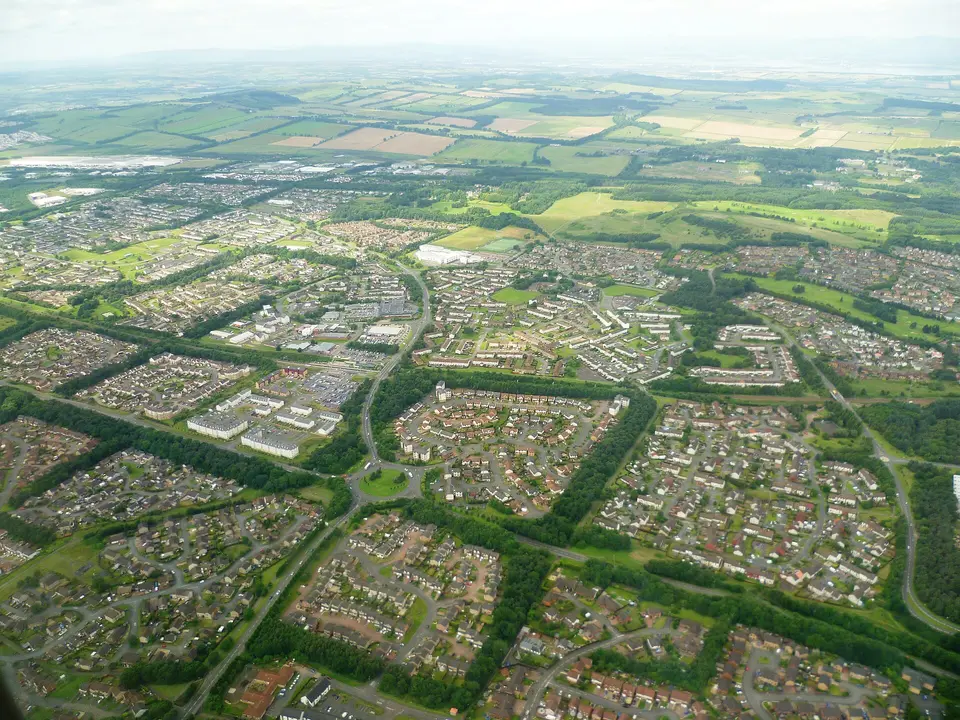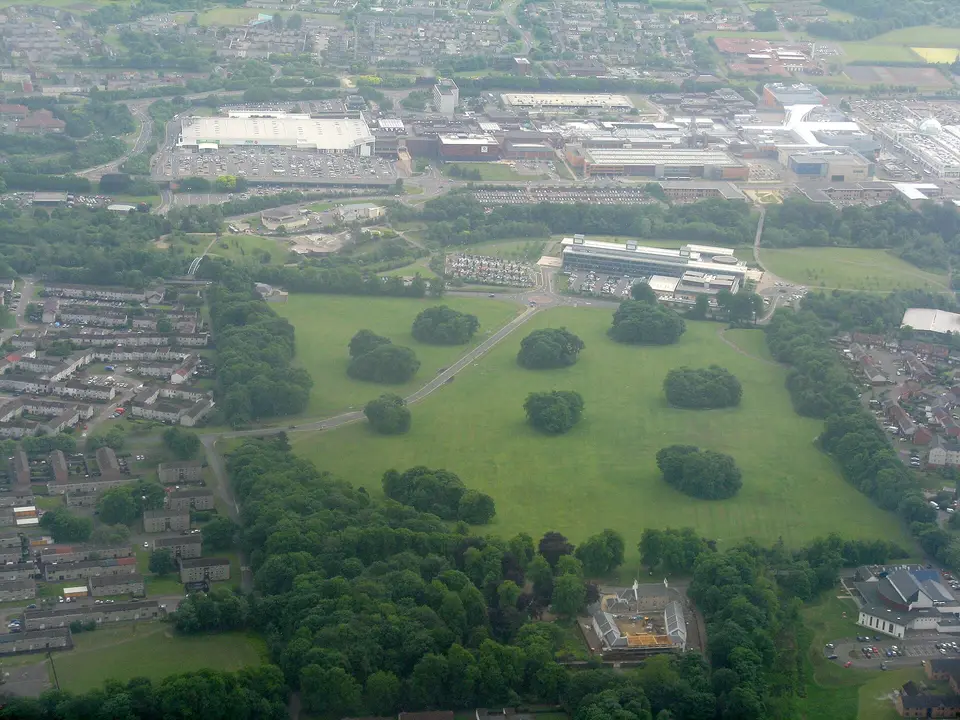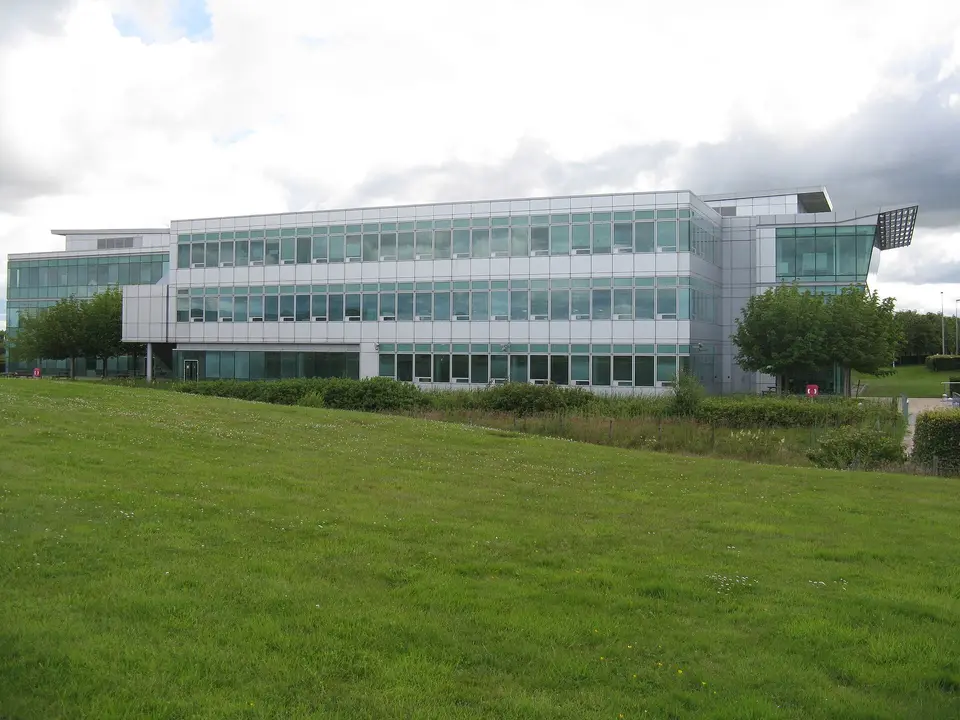
In 1990 Digital Equipment Corporation opened a semiconductor plant at South Queensferry at a reported cost of 200 million dollars, and the same company had an office in Livingston developing its OpenVMS operating system. A decade later both were gone. That rise and fall is the short version of Silicon Glen, and Livingston sat right in the middle of it. If you want to understand why companies come to Scotland, and why some leave, this town is as good a case study as any.
Built to attract industry
Livingston was designated as a new town in 1962 with two jobs: house people moving out of overcrowded Glasgow, and bring new industry to a West Lothian where shale mining was ending. The Livingston Development Corporation built factories ahead of demand on purpose-made estates, above all the Houston Industrial Estate and later Kirkton Campus, and marketed them abroad.
It worked. High technology and pharmaceutical companies moved in through the 1970s and 1980s. NEC, Motorola and Burroughs, later Unisys, all ran plants in or near the town. Kymata and Seagate’s IPS business had fabrication plants in Livingston. At its peak, Silicon Glen produced around thirty per cent of Europe’s personal computers and most of its workstations and cash machines.
What went wrong, and what stayed
The crash of the early 2000s hit Scotland hard because the region depended so heavily on electronics manufacturing. The large NEC plant in Livingston closed, Motorola shut its factory at Bathgate, and employment in Scottish electronics fell from about 48,000 in 2000 to 25,000 by 2004. Branch plants owned from abroad proved easy to close when global demand dropped.
Not everything left. Wyman Gordon still makes aircraft components on the Houston Industrial Estate. Mitsubishi Electric builds almost 150,000 air conditioning and heat pump units a year there. Paterson Arran runs the Royal Burgh Bakery in the town, and DS Smith has a box plant on the same estate. The lesson most local people draw is that firms with real roots in a place, through skills, suppliers or a product made nowhere else, tend to stay.
Why Scotland still appeals
The reasons companies give today are steadier than the old grants. Scotland has four ancient universities and several newer ones, producing graduates in engineering, computing and life sciences. The central belt between Edinburgh and Glasgow concentrates most of the population and the workforce within an hour’s travel. Office and industrial space outside the city centres costs less than in southern England, and Scottish Enterprise, the national economic development agency, offers advice and support to companies that want to grow.
Then there is the corridor itself. A business in Livingston can recruit from Edinburgh, Glasgow and the West Lothian towns, ship by the M8 and the M9, and put a visitor on a plane at Edinburgh Airport seven miles away. Since 2016 the tech sector has begun to grow again, this time around software firms rather than wafer fabs, with Edinburgh’s Skyscanner the best-known example.
Starting up versus buying in
People moving to Scotland to run a business face a familiar choice. Starting from scratch costs less up front but takes time to build customers and staff. Buying a going concern brings premises, a team and a turnover from day one, which is why so many small firms change hands rather than close when an owner retires. Marketplaces that list businesses for sale Scotland by region and sector give a quick sense of what is out there, from village shops and guest houses to engineering workshops and cafés. West Lothian, with its mix of towns and industrial estates, usually has a fair spread of both.
Whichever route you take, Scots law differs from English law on property, contracts and some employment matters, so local professional advice is worth paying for early. A solicitor who knows Scottish property law will save more than their fee on a lease alone.
Life outside work
Business decisions are not made only on spreadsheets. Many people who relocate to the central belt cite the quality of life as the clincher: short commutes by the standards of London, countryside within twenty minutes of most offices, and two very different cities on the doorstep. Weekends are when Scotland makes its case. Edinburgh’s old town, Glasgow’s museums and the castles scattered across the country all sit within easy reach of a Livingston office.
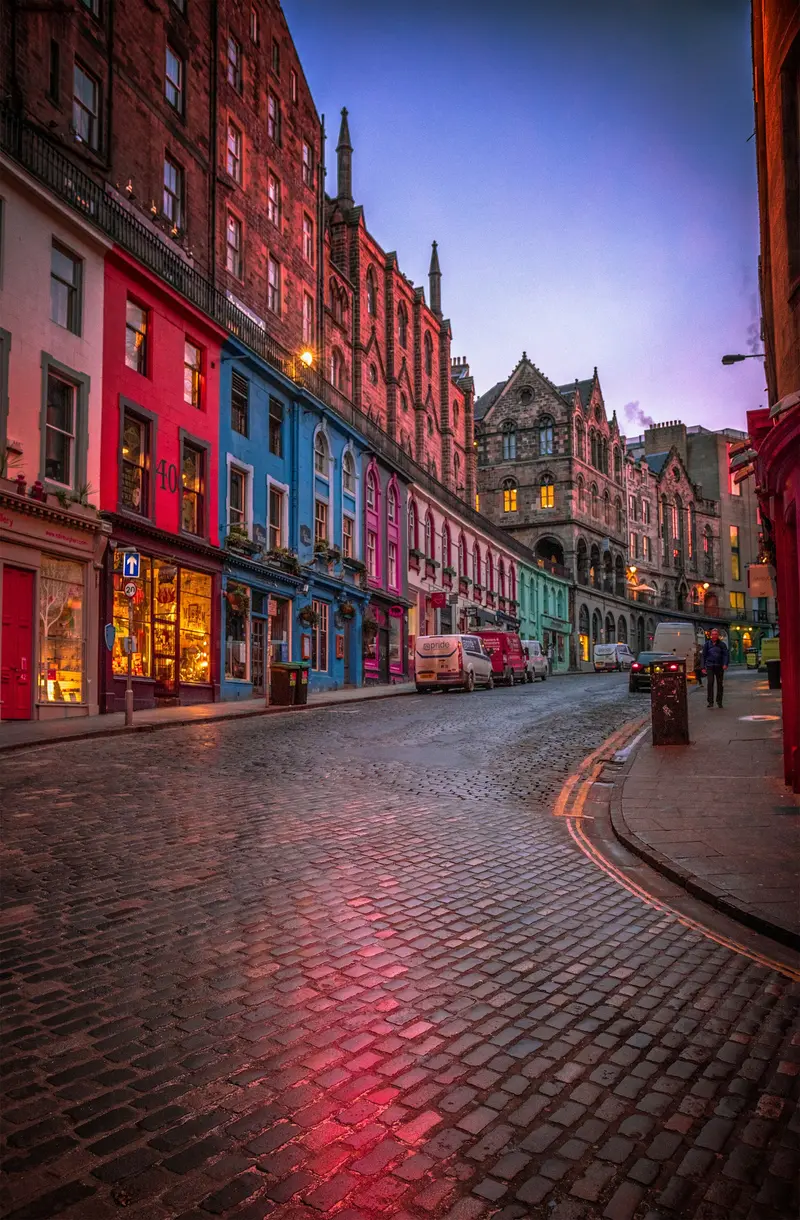
Castles in particular are part of the deal. Stirling, Edinburgh, Blackness and Linlithgow are all within an hour of the town, and the further reaches of the Highlands make a long weekend. New arrivals often spend their first year ticking them off, and some never stop.
Livingston today
The town’s industrial estates are still busy, if quieter than in the 1980s. Brucefield, Alba Business Park and Kirkton Campus house a mix of manufacturers and offices. West Lothian College offers further and higher education from its central campus in the town. And the town centre’s shops, the council and the courts at the Civic Centre are large employers in their own right, which gives the local economy a steadier base than the factories alone ever did.
Whether Livingston’s next chapter looks like its first is an open question. The infrastructure the planners built in the 1960s, roads, estates and a central location, has outlasted the industries it was built for. That may yet prove to be its most useful asset.