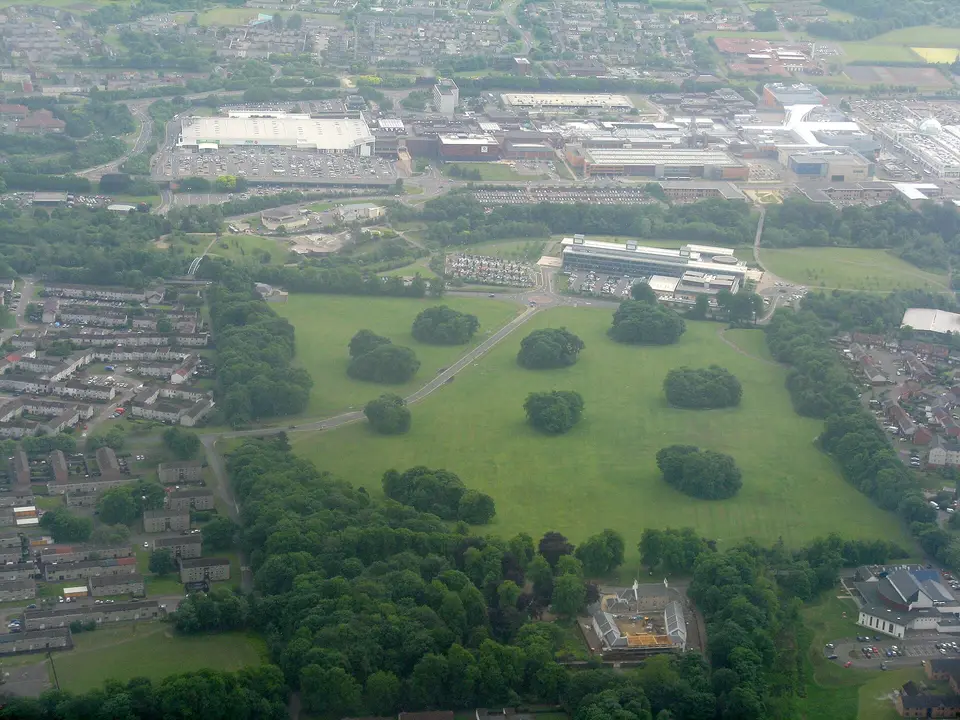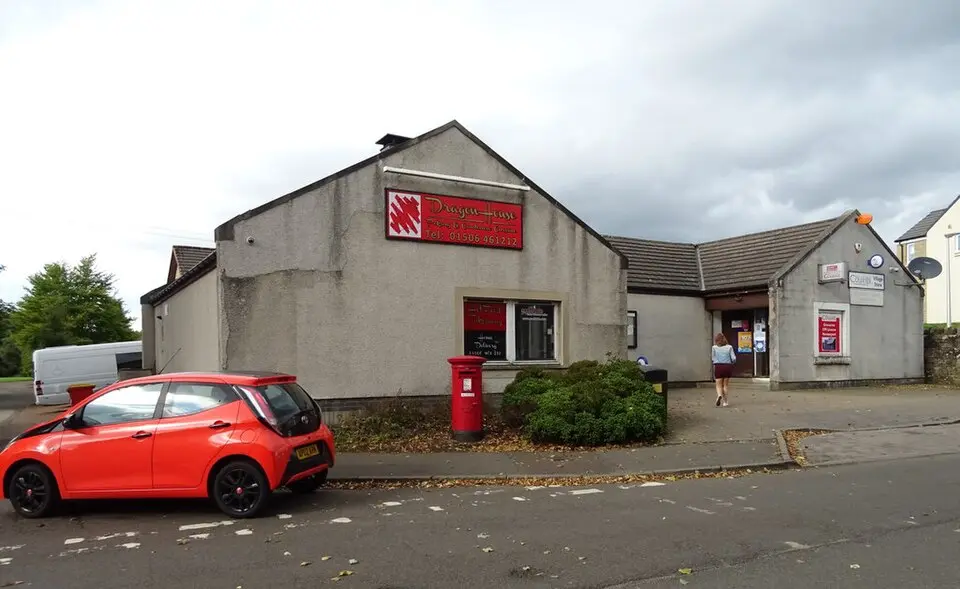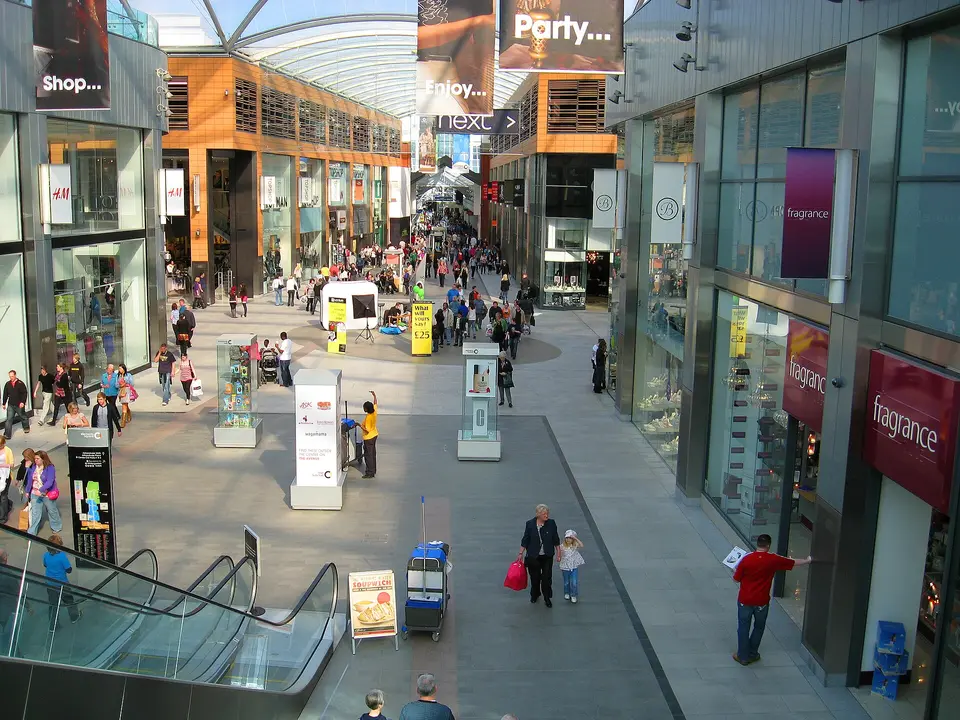
Livingston shopping is mostly a matter of crossing one road. On the south side of Almondvale Avenue stands The Centre, a mall that has been extended three times since the 1970s; on the north side is Livingston Designer Outlet, the largest outlet centre in Scotland. The bus terminal sits between them. Most visitors never see anything else of the town, which is a pity, but it does explain why Livingston appears on so many Saturday plans across West Lothian and Edinburgh.
Taken together, the two buildings and the retail parks around them hold well over a million square feet of selling space. Wikipedia puts the combined figure at 1.29 million square feet and ranks central Livingston as the largest indoor shopping location in Scotland. Numbers like that are easy to repeat and hard to feel, and Livingston shopping is better understood on foot than on paper. In practice it means you can lose an afternoon here without trying, and that it is worth knowing which building you actually need before you park.
How Livingston shopping grew from one mall
The first phase opened in 1977, built by the Livingston Development Corporation to serve a town that was still filling up. People called it the Livingston Centre, later the Almondvale Centre, and the original part is still there as Almondvale Walk. It housed local names such as Virgo and Coda Music next to chains like Woolco and Fine Fare. By most accounts it was a dim place, a roofed street more than a mall.
Phase two arrived in the mid-1990s with a large supermarket and two towers that still mark the entrances. Phase three, opened in 2008 and known for a while as The Elements, added a high glass roof over a widened street, the Wintergarden civic space and the avenues that now hold Next, River Island and Marks & Spencer. The ownership changed hands too: Land Securities sold the centre in 2014, and in 2023 it passed to M Core while the surrounding retail parks went to Frasers Group.
The Centre: anchors, zones and the Wintergarden
Today The Centre is organised in three zones. Almondvale Walk is the 1970s core, Almondvale Place the 1990s extension, and Elements Square with the Wintergarden and The Avenue is the newest part. If you enter from the bus terminal you usually come in through the newer end, which is the brightest and the busiest.
The two anchor stores are Marks & Spencer and Primark. Around them sit the familiar high street names, among them H&M, New Look, Schuh, WHSmith, Waterstones and HMV, plus an Asda. None of this is unusual for a regional centre. What makes the centre useful is that everything sits on one level and under one roof, so a wet November afternoon does not change the plan.
The Wintergarden deserves a short detour. It is an internal civic space rather than a shop, used for seasonal events, and it is one of the few places in the building where people sit down without buying anything.
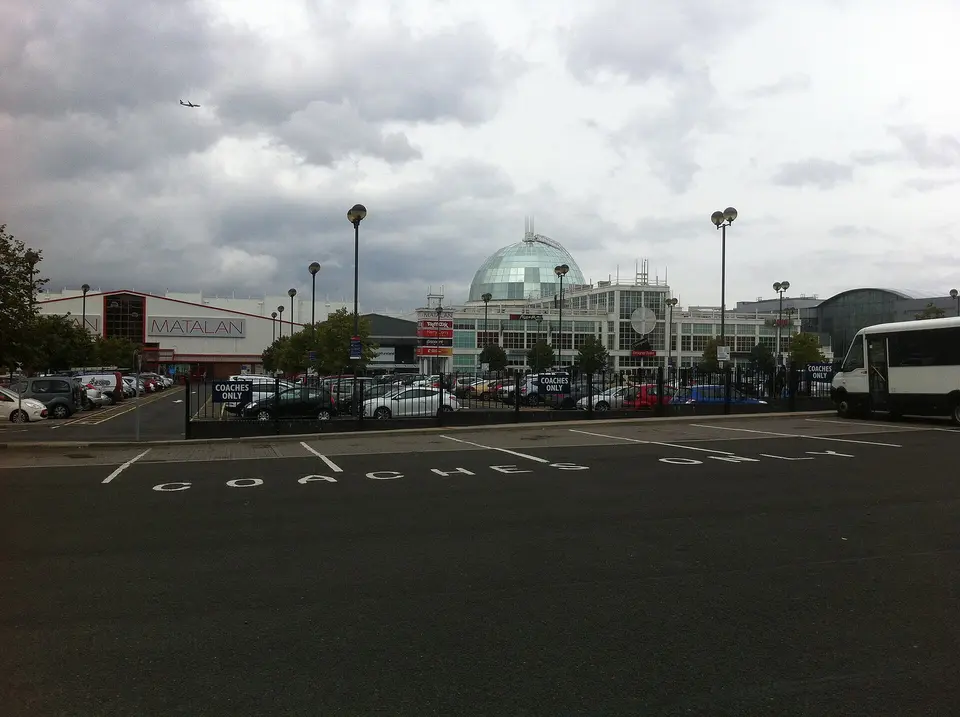
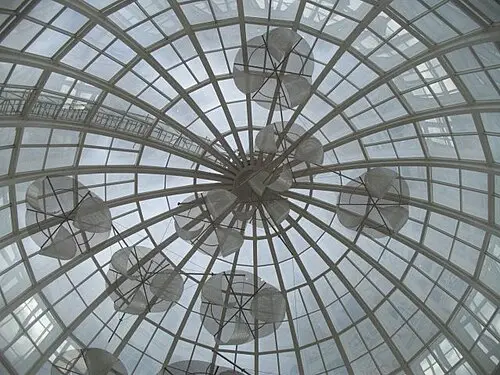
The Centre seen from the Almondvale side. · The outlet dome, from the years when it still carried the McArthurGlen name.Photo: Darrin Antrobus, CC BY-SA 2.0Photo: Richard Webb, CC BY-SA 2.0
Livingston Designer Outlet across the road
The outlet opened in October 2000 as McArthurGlen Livingston and took its present name in 2013. Its glass roof, reminiscent of a Victorian conservatory, was designed by the architect Don Hisaka, and it is the one piece of shopping architecture in the town that people photograph on purpose.
Around a hundred stores trade here, mostly brand outlets: Adidas, Nike, Clarks, Calvin Klein, Tommy Hilfiger, Ted Baker, Skechers, Lindt and a Marks & Spencer outlet among them. Stock is end of line or made for outlets, so sizes and colours come and go. Regular visitors tend to treat it as a place to check rather than a place to plan around.
Leisure, food and an evening in the centre
The upper floor of the outlet changes the character of the place after six o’clock. An eight-screen Vue cinema shares the level with a food court that includes McDonald’s, Subway and Chopstix, and restaurants such as Pizza Express, Pizza Hut and Hot Flame World Banquet stand close by. A mini-golf venue on the site closed in 2025 and gave way to a trampoline park, which tells you who the evening crowd tends to be.
Grown-ups looking for more than a film have the pubs and hotels of the town centre within a short walk, and some take their evening entirely online; for adults who play casino games from home, guides to MuchBetter casinos in the UK explain which sites accept that payment app. Nothing of that kind exists inside the malls themselves, which remain firmly family territory.
For a proper meal rather than the food court, the restaurant guide covers the town centre and the older pubs in Livingston Village.
Retail parks and the big sheds
Around the two malls sit open-air retail parks with the larger formats: furniture, DIY, electricals and sports stores with their own car parks. They change tenants more often than the malls and are best checked before a dedicated trip. Since 2023 these parks have been in different hands from The Centre, so they are run as separate sites even though they share the same roads.
Drivers usually find it easiest to park once on the outlet side and walk. The roads around Almondvale were designed for the car, as was much of Livingston, but the roundabouts can be confusing on a first visit and the signage favours the big names.
A shopping guide to the district parades
Every district of the new town was planned with a small centre of its own, and these still carry most of the everyday trade. Craigshill had The Mall, one of the first covered shopping centres in Scotland when it opened. Carmondean in Deans sits next to Livingston North station. Ladywell and Murieston have their own groups of shops, the Murieston ones beside Livingston South station, and Livingston Village keeps a few small units along Village Lane.
These parades are not a destination, and it would be odd to pretend otherwise; for most residents, though, they are what Livingston shopping means on a weekday. They are where people buy milk, post parcels and get a haircut. For anyone moving to the town they matter more than either mall, and they are worth a look when choosing where to live.
When to go
Saturdays between noon and four are the peak, and the run-up to Christmas is busier still, with queues on the A899 approach and full car parks on the outlet side. Weekday mornings are calm enough that the Wintergarden can feel almost empty. Individual stores set their own hours, so check the store rather than the building.
School holidays shift the pattern. The cinema and the food court fill in the afternoons, while the shops themselves stay manageable. If the point of the trip is the outlet, go early in the week, when the rails are tidier and the changing rooms have no queue. As a rough guide, two hours covers one building properly; trying both in a single afternoon is possible, but your feet will have an opinion about it.
Getting to the centre
The bus terminal on Almondvale Avenue has seven stances, with Lothian Country as the main operator and regular services from Edinburgh, Edinburgh Airport and the West Lothian towns. Livingston North station on the Edinburgh to Glasgow Queen Street line via Bathgate is the closer of the two railway stations to the shops, though it is still a walk; Livingston South is on the Shotts line and better suited to the southern districts. The travel guide has the details.
By car, the town centre sits between the M8 to the north and the A71 to the south, with the A899 along the eastern edge. Most Saturday queues build on the approach roads rather than in the car parks themselves, so arriving before eleven makes a noticeable difference.
One last thing that surprises people from Edinburgh: the Civic Centre, with the council and the sheriff court, stands just north of The Centre on the bank of the River Almond. Shopping and civic business share the same few hundred metres, which is exactly what the planners of the 1960s intended.