Loch Ness holds more fresh water than all the lakes in England and Wales put together. It is the sort of fact that gets repeated in every guidebook, and for once it deserves to be, because it captures something true about Scotland: the country is bigger, deeper and emptier than its population suggests. Around five and a half million people live here, according to National Records of Scotland, in a country that covers roughly a third of the land area of the United Kingdom.
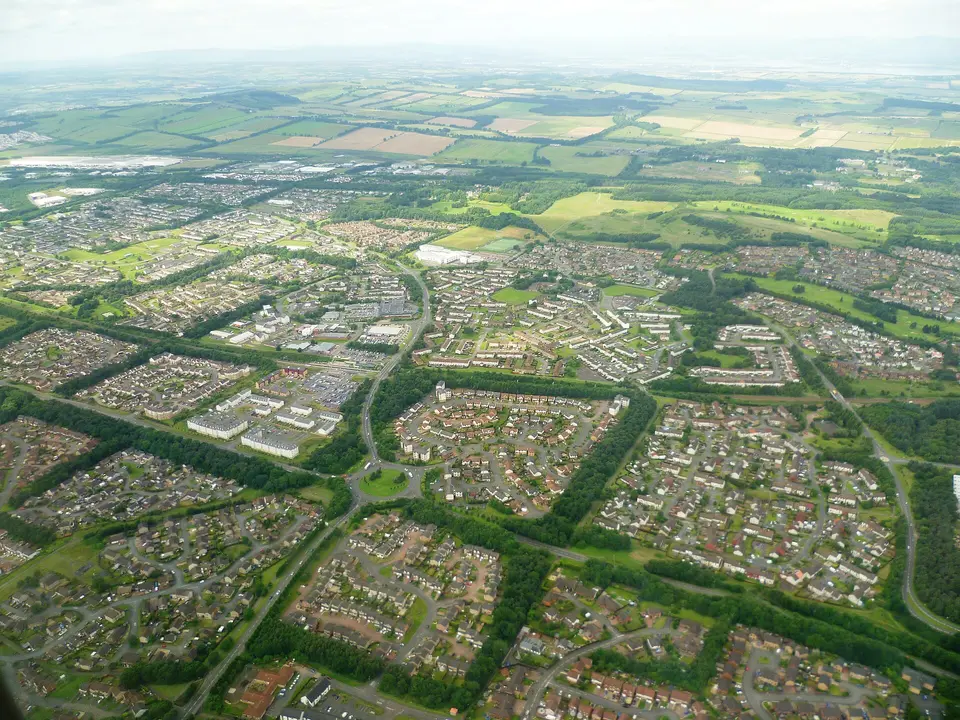
Most of them live in a narrow strip between Edinburgh and Glasgow, where Livingston sits. The rest of the figures below explain why.
Islands
Scotland has around 790 offshore islands. Fewer than a hundred are inhabited, and most of those are in three groups: the Hebrides off the west coast, and Orkney and Shetland to the north. Some, such as Skye and Lewis and Harris, are large enough to have their own towns and ferry timetables; others are home to a single farm or a lighthouse.
For visitors, the islands are where the numbers become personal. Ferry crossings, many run by Caledonian MacBrayne, are part of daily life in the west, and a trip that looks short on the map can take a day. Island-hopping is a popular way to see them, but it rewards slow planning more than ambition.
Mountains and Munros
A Munro is a Scottish mountain above 3,000 feet, or 914 metres. Sir Hugh Munro published the first list in 1891, and the Scottish Mountaineering Club’s current count stands at 282. Walkers who climb them all are said to have compleated, a spelling that is deliberate. Ben Nevis, at 1,345 metres, is the highest point in the British Isles.
The comparison with Wales is instructive. Snowdon, the highest mountain in Wales, reaches 1,085 metres, and Snowdonia packs its peaks into a compact national park, while the Scottish Highlands spread theirs over a much larger and more remote area. Walkers who know both often say Wales is friendlier for a short break and Scotland for a long one. If you are weighing up a trip to the Welsh hills instead, guides to where to stay in North Wales cover the bases around Snowdonia, and the contrast with a Scottish glen is worth experiencing at least once.
Lochs and water
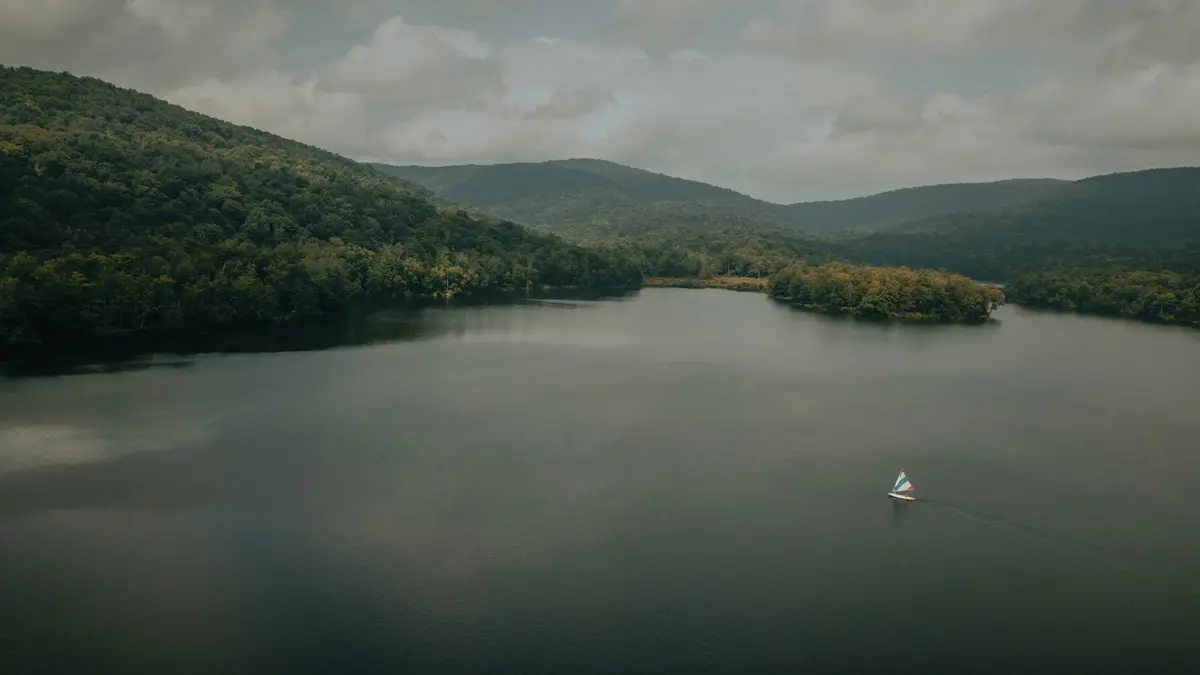
Scotland has more than 30,000 freshwater lochs. Loch Lomond is the largest by surface area, Loch Ness the largest by volume, and Loch Morar the deepest. The word loch covers sea inlets too, such as Loch Fyne and Loch Long, which reach far inland on the west coast and make the coastline much longer than a map at first suggests.
Closer to Livingston, the waters are smaller and mostly man-made. Linlithgow Loch beneath the palace is natural; Eliburn Reservoir in the town is not. The River Almond, which runs through Livingston, flows east to meet the Firth of Forth at Cramond.
People and where they live
The central belt, between the Firth of Clyde and the Firth of Forth, holds the majority of Scotland’s population. Glasgow is the largest city and Edinburgh the capital. Aberdeen, Dundee, Inverness, Perth and Stirling make up the rest of the cities. Away from the belt, much of the Highlands has a population density lower than almost anywhere else in western Europe. Drive a few hours north and the change is obvious: fewer houses, longer gaps between villages, single-track roads with passing places.
Livingston is the largest town in West Lothian and the second-largest settlement in the Lothians after Edinburgh. At the 2011 census it had 56,269 people, up from 50,826 ten years earlier.
Planned towns, real and virtual
After the Second World War, Scotland built five new towns to take population from crowded Glasgow and to attract new industry: East Kilbride in 1947, Glenrothes in 1948, Cumbernauld in 1955, Livingston in 1962 and Irvine in 1966. Each was planned from scratch, with districts, distributor roads, industrial estates and a town centre laid out on paper before the first house went up.
Planning a town from nothing is something many people now try for fun on a screen, and the city-building games that let players lay out roads, zones and transit owe a fair bit to the same ideas. Players who build a Livingston-style grid of roundabouts and separated paths quickly learn why the real one took thirty years to complete.
The real new towns had their successes and failures. Cumbernauld’s town centre megastructure became famous for the wrong reasons; Livingston kept its centre lower and greener, with the river running through it. You can read more on the Livingston history page.
A few odd ones
Scotland’s national animal is the unicorn. Its oldest university, St Andrews, was founded in the early fifteenth century, and the country has four ancient universities in all. The first oil boom in the world happened in West Lothian, where shale oil works were producing on an industrial scale in the 1860s, decades before the North Sea fields. And the Forth Bridge, opened in 1890, became a UNESCO World Heritage Site in 2015.
That last one can be seen from a short drive north-east of Livingston. Few countries let you stand next to three centuries of engineering on a single shoreline, and it is worth the trip on any clear afternoon.