Beresford Rise has a milestone in it. The stone stood beside an old road long before Livingston existed, and it has been moved a little from where it once stood, but it is still there, near the A71, a reminder that the ground under Dedridge was a route somewhere long before it was a district. A short row of cottages on the same street predates the new town too, and Abbotsford Rise appears to follow the line of that old road.
Everything else in Dedridge belongs to the new town. It lies in the south of Livingston, just south of the town centre at Almondvale and north of Murieston, and most of its housing is terraced homes built by the Livingston Development Corporation.
A reading list on the street signs
Dedridge has one of the more literary naming schemes in town. Its streets take their names from the novels of Sir Walter Scott and all end in Rise: Ivanhoe Rise, Kenilworth Rise, Crusader Rise, Clement Rise, Nigel Rise, Quentin Rise, Templar Rise, Staunton Rise. If you know your Scott you can almost reconstruct a shelf of his books from a walk around the district.
It is a nice idea and it has aged well. Names like these give a planned district a little texture that the housing alone does not, and they make it easy to tell a Dedridge address from one in any other part of Livingston.
Which novels are on the map
The names make more sense with the books beside them. Ivanhoe Rise and Templar Rise both come from Ivanhoe, published in 1819, Scott’s novel of knights and Templars in twelfth-century England. Kenilworth Rise is named after his 1821 novel set around Kenilworth Castle and the court of Elizabeth I. Nigel Rise takes its name from The Fortunes of Nigel, and Quentin Rise from Quentin Durward, both from the early 1820s. Staunton Rise recalls George Staunton, a character in The Heart of Midlothian, and Abbotsford Rise borrows the name of the house Scott built for himself in the Borders.
Crusader Rise points to the crusading tales he wrote in the same years. Not every name traces cleanly to a single book, and a few seem to have been chosen simply because they sounded right next to the others.
If you grew up in Dedridge, there is a fair chance you knew the street names long before you ever opened Scott. That may be the most effective piece of literary education the new town ever managed.
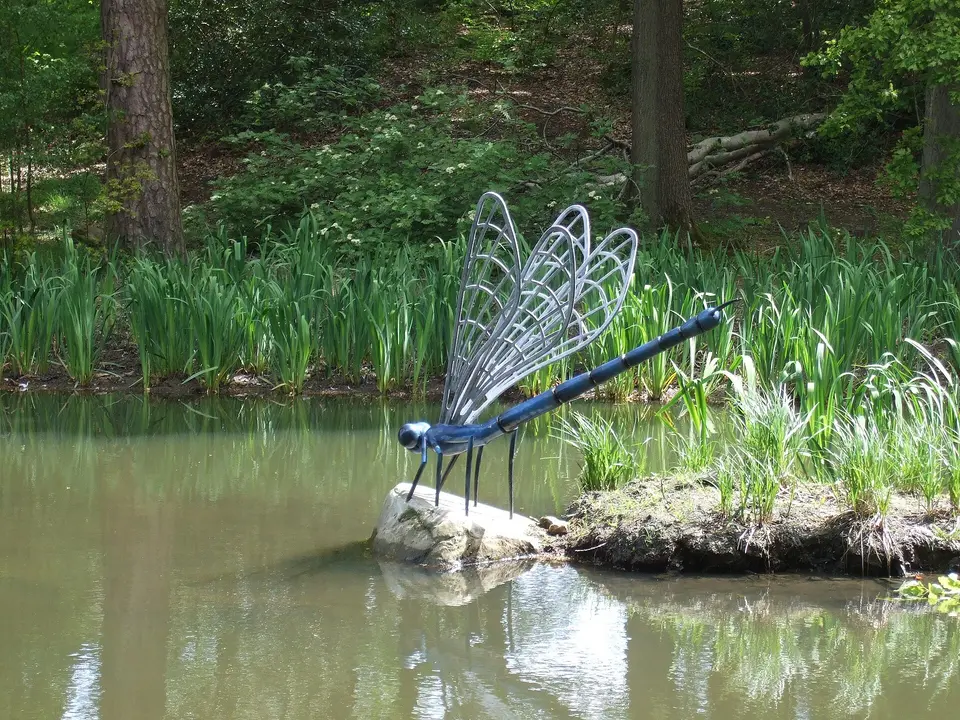
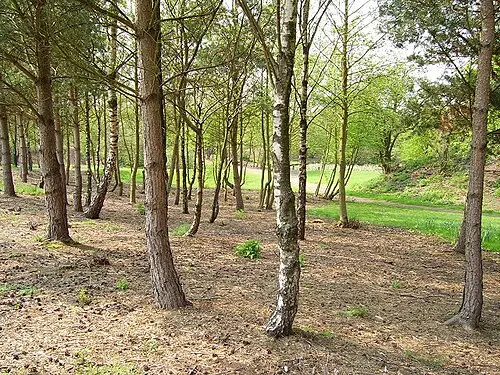
The damselfly artwork at the pond · One of the woodland strips between the streetsPhoto: Phemisters, CC BY-SA 3.0Photo: Richard Webb, CC BY-SA 2.0
Woodland between the houses
The planners took landscaping seriously here. The original layout of Dedridge broke the housing up with natural features, so the district is threaded with strips and pockets of woodland, several of them looked after by the Woodland Trust. Photographers have described the result as typical Livingston: concrete-clad houses in a woodland setting. It sounds like a contradiction until you walk it.
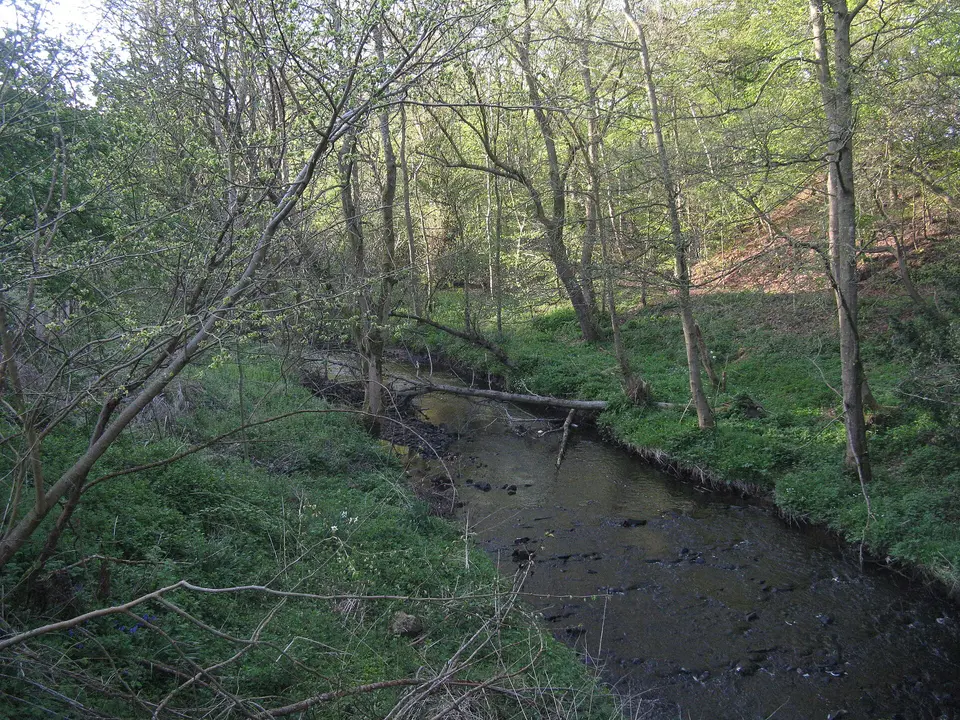
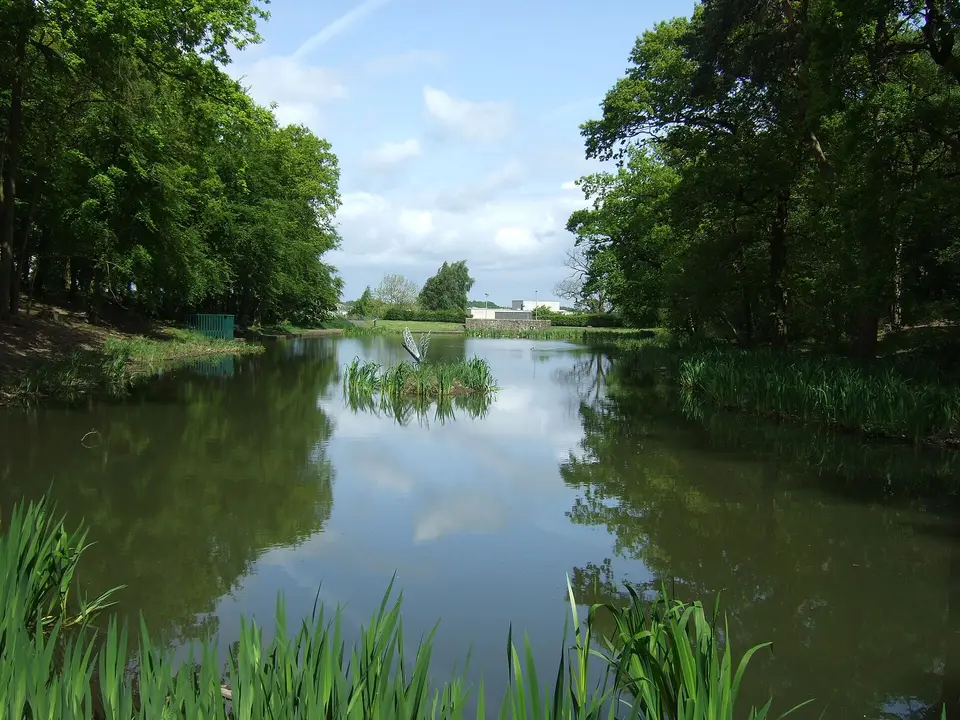
The ponds are the best of it. Dedridge Pond lies just south of Kenilworth Rise, with a damselfly sculpture beside the water, and a second pond sits next to Staunton Rise, known to some locals as the Froggy Pond. The Dedridge Environment Ecology Project cares for the main pond and the Dedridge Burn Plantation around it. At one point the Dedridge Burn itself re-emerges into the open, worth a look if you are following the water.
On a quiet morning the pond is one of the more peaceful spots in this part of town.
The volunteers deserve the credit. Without the ecology project, a pond in the middle of a housing district would be easy to neglect, and the damselfly sculpture is a small signal that people here treat it as something worth looking after. If you visit, the circuit of both ponds takes in most of what makes Dedridge pleasant to walk through, with the woodland strips linking them.
The Lanthorn, Crofthead and the rest
Dedridge has two community centres. The Lanthorn, on Kenilworth Rise, also houses the public library, and its name is an old spelling of lantern. The second centre is Crofthead Farm, on Templar Rise, which keeps the name of a farm that stood here before the housing.
Dedridge Health Centre is on Nigel Rise, with a dental practice attached, so most everyday needs can be met without leaving the district. There are three care homes in the district: Crusader Court on Crusader Rise, Woodlands Care Home on Quentin Rise and Limecroft on Templar Rise. The 9th West Lothian (Dedridge) Scout Group has its own premises, and there is a local sports club as well. For a district of terraces and footpaths, it is well supplied with places to meet, and the Lanthorn in particular acts as a focal point.
The district also has its own newsletter. The Dedridge Grapevine comes out ten times a year, and the same editor has run it for more than thirty years.
Getting around
Footpaths link Dedridge north to Almondvale and the shops at the Centre, which is a short walk from most of the district, and south to Murieston and Livingston South station. The A71 runs close by on the southern side for anyone heading towards Edinburgh or Kilmarnock. The Livingston travel guide covers the bus routes.
Crofthead is a good example of the planning that runs through it. Roads and pedestrian routes were kept apart, and the green space between them still needs a lot of mowing.
Make a little time for Dedridge.
- 01
Circle the ponds
Dedridge Pond and the smaller pond by Staunton Rise sit within a few minutes' walk of each other.
- 02
Spot the novels
Ivanhoe, Kenilworth, Quentin, Nigel: the street names are a reading list from Walter Scott.
- 03
Walk on to Murieston
Dedridge runs south into Murieston and its trail along the Murieston Water.