On the morning of 9 November 1979, a forestry worker employed by the Livingston Development Corporation went up the slope of Dechmont Law and came back with a story that police would end up investigating. Robert Taylor said he had met an object in a clearing on the hill. Whatever happened, the Livingston incident became the only UFO report in the United Kingdom to turn into a criminal investigation, and Dechmont Law, on the eastern edge of Deans, has never quite shaken it off.
It is an odd claim to fame for a district whose history is mostly about oil and railways.
From shale to new town
Deans is older than Livingston the new town. The district takes its name from the Deans Oil Works, one of the shale oil works that once shaped much of West Lothian, and from the small settlement beside it called Deans Cottages. The ground here is rich in oil shale, and for a time it was the reason people lived here at all.
The western part of the district grew up as a separate village called Livingston Station. It was named after the railway station that served the original village of Livingston, a short distance to the south. When the new town took the name Livingston in 1962, that older village became Livingston Village, and Livingston Station was absorbed into the new district of Deans. Some residents still call that part of Deans by its old name, and Main Street there still has the feel of a village high street, with a Co-operative store and a few takeaways.
Historically, all of this was part of Linlithgowshire, the old county name for West Lothian, and Main Street kept its village feel long after the oil works closed. Walk it end to end and you can still pick out the older buildings among the newer ones.
Living in Deans now
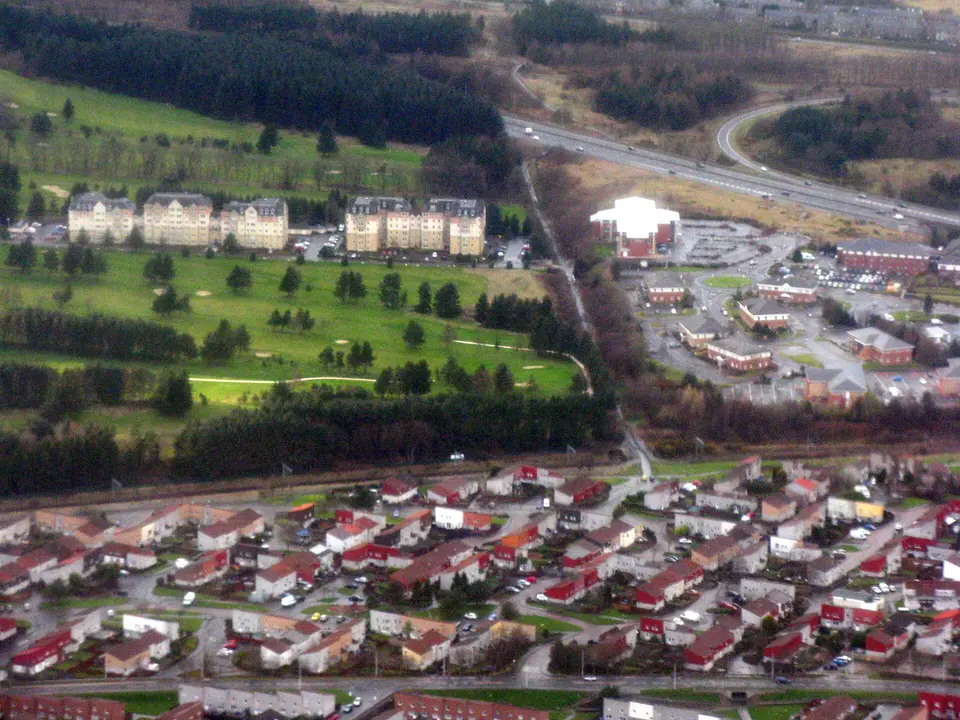
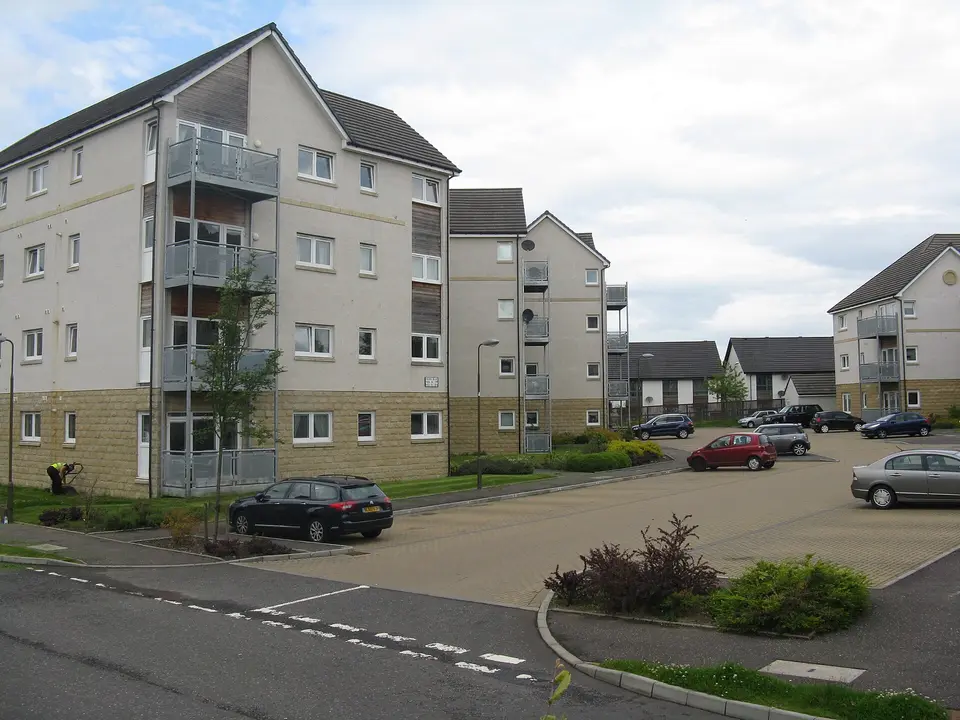
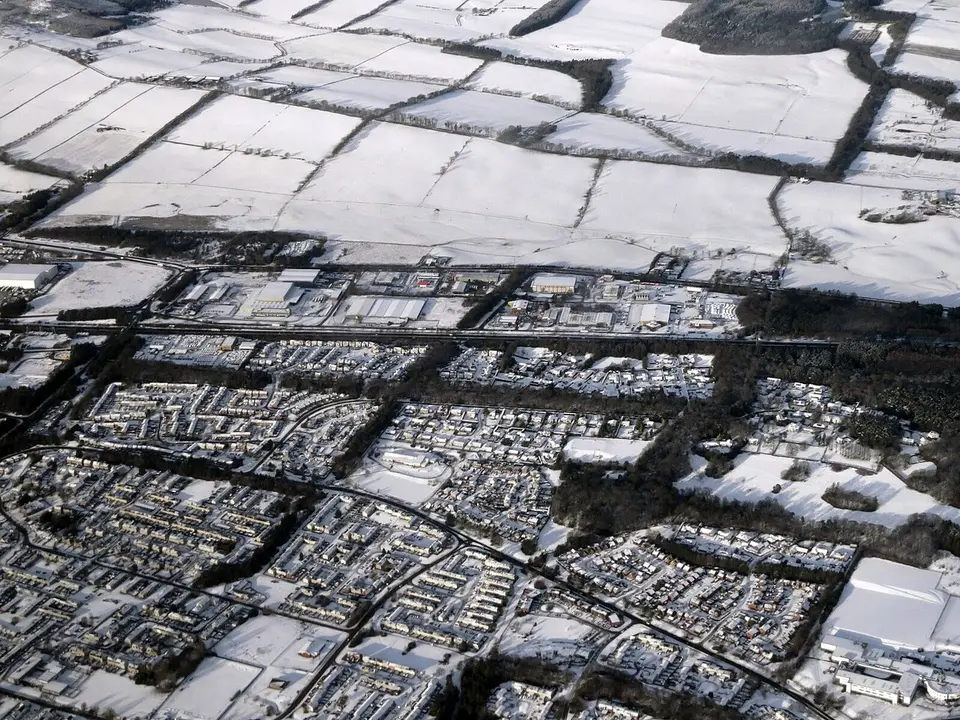
In 2010 Deans had a population of 3,641. Its northern edge is the M8 motorway between Edinburgh and Glasgow, and the railway forms its southern boundary, so the district is easy to place on any map.
The main shopping area is the Carmondean Centre, with a Morrisons supermarket, small shops, cafés, takeaways and a bank. Carmondean Library is at the Livingston North Partnership Centre, and two post offices serve the district, one at Carmondean and one on Main Street. There are play areas on Glen Road and beside the Carmondean Centre, and Woodlands Park offers a stretch of open grass and trees.
Schools are well covered. Deans Primary, Meldrum Primary and St John’s RC Primary serve the younger children, and Deans Community High School now has a new building.
For churches, St Andrew’s Church of Scotland stands in the Livingston Station part of Deans and belongs to the same parish as Livingston Old Kirk in the village. St Peter’s RC Church is in the Carmondean area. The Masjid and Islamic Centre is in Deans too.
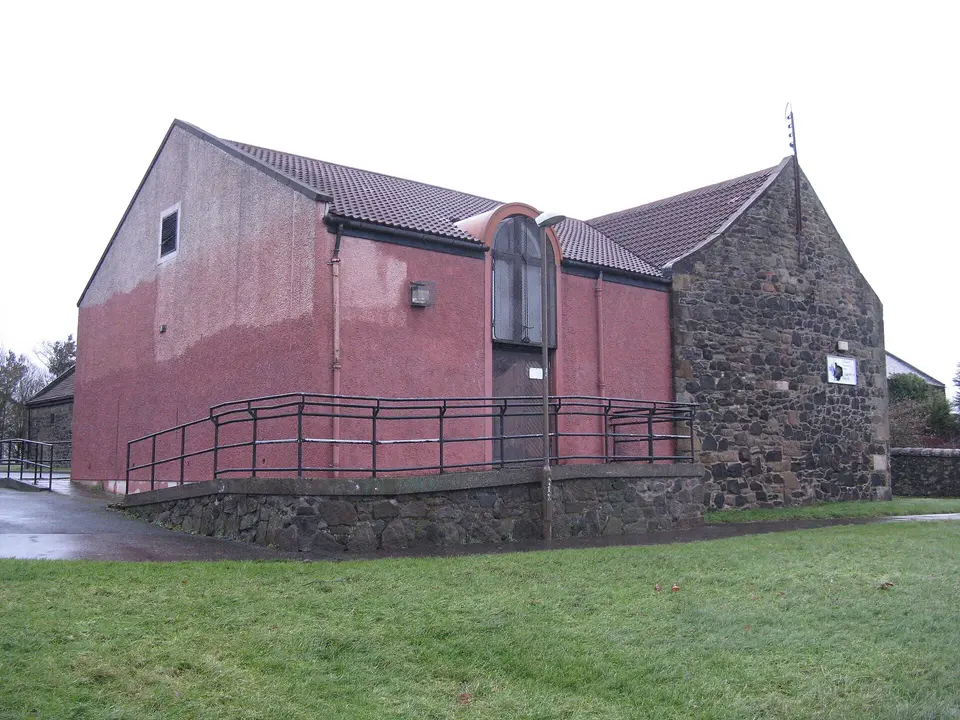
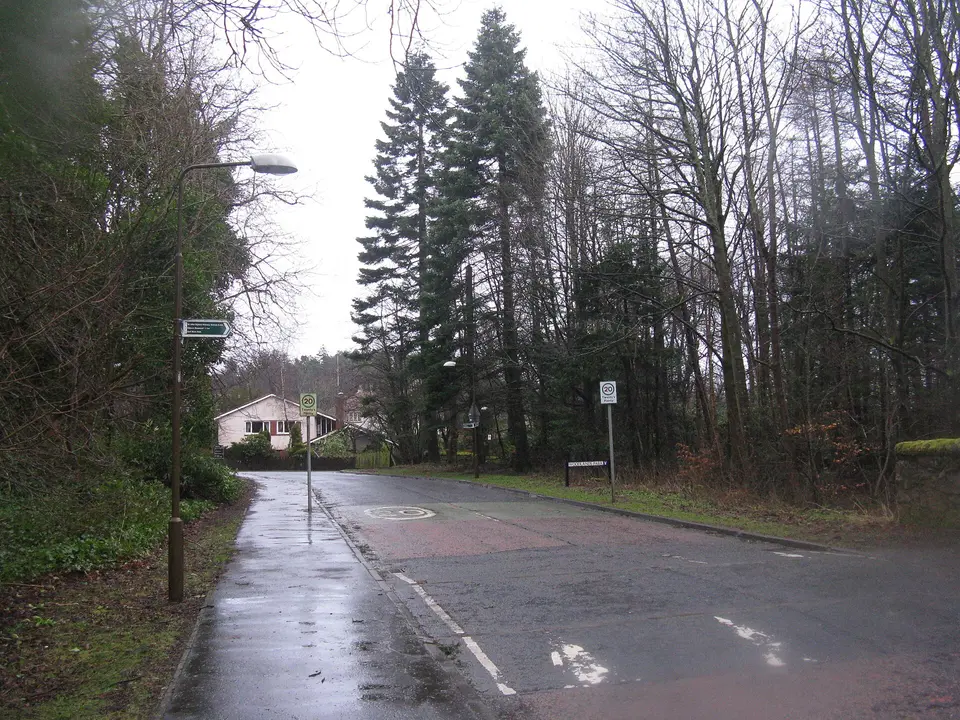
The parish church at Deans · Woodlands Park, DeansPhoto: M J Richardson, CC BY-SA 2.0Photo: M J Richardson, CC BY-SA 2.0
Shale oil country
The oil shale under Deans was once the area’s main employer, and the industry shaped West Lothian more than anything before the new town. Works like the one at Deans processed shale into oil, and the waste was heaped into the red spoil bings that still mark the county’s skyline in places. When the industry wound down in the twentieth century, settlements like Livingston Station were left as small villages that had lost the reason they were built.
The new town changed that within a generation. After 1962 the area expanded rapidly, and the industrial estate in Deans now holds distribution centres, wholesalers, food businesses and a council depot. It is a different kind of industry, but the district is still a place where people come to work as well as live.
Governance has changed too. The Livingston Development Corporation ran the town from 1962 until 22 March 1997, when its responsibilities passed to West Lothian Council. Deans now sits in the council’s Livingston North ward.
Livingston North and the line to Edinburgh
The original Livingston station opened in 1849 and closed in 1948. Rail returned to the area on 24 March 1986, when Livingston North station opened about a quarter of a mile east of the old site, as passenger services came back to the line between Edinburgh and Bathgate. For years it had a single platform. A second platform followed in 2008 and electrification in 2010, as part of the Airdrie to Bathgate rail link that reconnected the line through to Glasgow.
For anyone living in the north of town, Livingston North is the quickest way into Edinburgh. The travel guide compares it with Livingston South, on the other side of town in Murieston.
Dechmont Law and the edges
The highest point in Deans is Dechmont Law, at 217 metres, while the centre of the district stands at about 159 metres. It is a modest hill, and from the top a good part of the new town lies spread out below. Nearby is the Deer Park Golf and Country Club, with its course and a bowling alley, one of the main leisure spots on the north side of town.
North of the M8, the A89 leads to the village of Dechmont and the grounds of Bangour Village Hospital. Back on the Law, a clearing among the trees is where the 1979 story is set, about as unremarkable a spot as Livingston has.
Make a little time for Deans.
- 01
Find the old village
Main Street, in the western part of Deans, is the core of the former village of Livingston Station.
- 02
Climb Dechmont Law
The highest point in Deans, at 217 metres, with views over the town and a story still told across Livingston.
- 03
Take the train east
Livingston North station connects Deans with Edinburgh and Glasgow Queen Street.